Oven-Roasted Parsnips with Golden Edges and Tender Centres
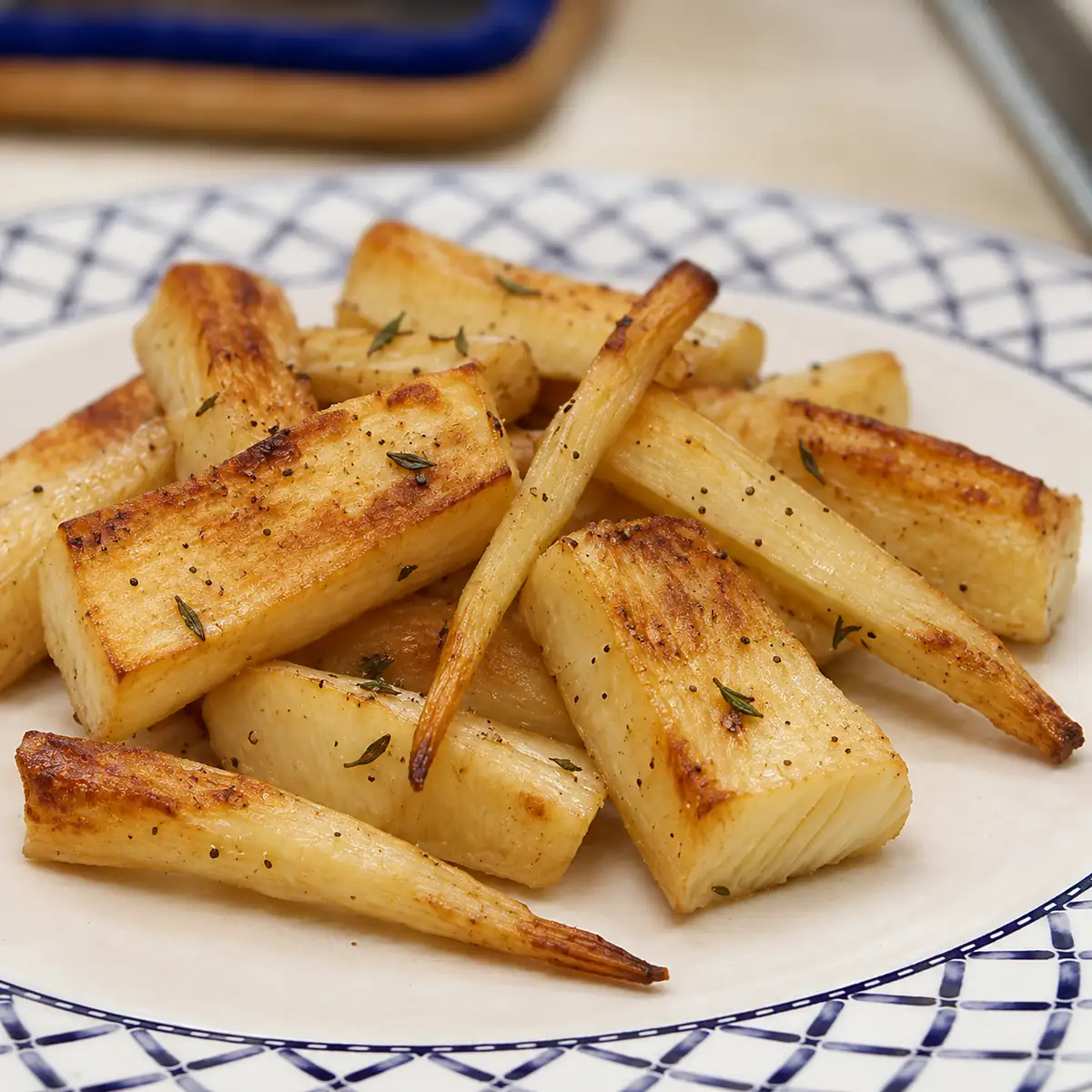
Oven-roasted parsnips turn a pale, firm root into a sweet, tender side with browned edges. This recipe uses olive oil, thyme, salt, and pepper, with a little lemon juice added after roasting. There is no honey or maple syrup in the pan: the parsnips already contain enough natural sweetness. Cut them into pieces of similar thickness, give them space on a metal baking sheet, and roast until a knife passes easily through the thickest part.
A root vegetable worth roasting on its own
Parsnips look like cream-coloured carrots, but their flavour is more aromatic and their sweetness becomes more pronounced in the oven. The outside browns while the inside softens. They are not supposed to have the same crisp shell as a fried potato; the goal is a tender centre with caramelized surfaces and a few darker tips.
Roasting them separately gives you control over that balance. A crowded pan of mixed roots can be convenient, but potatoes, carrots, and parsnips do not always finish together. For this recipe, keep the pan devoted to parsnips. If you want a separate potato option, make my air-fryer roasted potatoes alongside them rather than adding uncooked potato chunks halfway through.
Choosing parsnips and preparing the core
Choose firm parsnips without soft spots. Medium roots are usually easier to cut into even pieces than very large ones with thick shoulders and narrow tails. A few surface marks can be peeled away. Avoid roots that bend limply or feel spongy, and do not expect roasting to restore vegetables that have deteriorated in storage.
The recipe uses one and three-quarter pounds after trimming and peeling. Buy a little more to allow for that preparation. Wash away soil, trim the stem end, and peel the thin skin. If the roots are small and very fresh, scrubbing may be enough, but peeling gives a more consistent result when the batch contains different sizes.
Cut large parsnips lengthwise into quarters and inspect the centre. If a thick core feels notably hard or woody, remove that narrow strip with a small knife. Young, tender cores do not need to be discarded automatically. I make that decision from the individual root rather than cutting out the middle of every parsnip and wasting the tender ones.
Cut for even cooking rather than identical shapes
Cut the peeled roots into batons roughly two to three inches long and about half an inch thick. Split thick upper sections several times, while narrow tips may only need halving. The pieces will be different shapes, which is fine. Similar thickness matters more than a tray of perfectly matching rectangles.
Very thin tips can brown before the thicker centres become tender. Keep them a little longer or set them together at one side of the tray so you can remove them early if necessary. A large unsplit shoulder will take much longer than a narrow tail, even if both pieces are the same length.

Dry the cut pieces with a clean towel before seasoning. Water left from washing turns into steam and delays browning. Put the parsnips in a bowl with the olive oil, thyme, salt, and pepper. Toss thoroughly, lifting pieces from the bottom so the oil coats all sides rather than collecting underneath the first handful.
Use a hot oven and an uncrowded metal tray
Heat the oven to 425°F with a rack near the middle. Use a large rimmed metal baking sheet, approximately thirteen by eighteen inches. Spread the seasoned parsnips in one layer, leaving small gaps. Place a broad cut face against the metal where practical. Parchment is convenient for cleanup, but use a product rated for the oven temperature and expect slightly different browning than on bare metal.
If your tray is small, divide the batch between two trays. Piling the vegetables into a deep dish traps moisture and makes the lower pieces steam. More oil does not solve overcrowding. I would rather use a second tray than keep extending the roasting time while the tips dry out.

Roast for twenty minutes, then turn the pieces with a thin spatula. Continue for ten to twenty minutes, checking the narrow pieces first. A good finished parsnip has golden-brown patches and a centre that yields easily to a knife. Depending on the oven and the roots, the full batch may take thirty to forty minutes.
Judge colour and tenderness together
If the surfaces are still pale but the centres are tender, spread the pieces farther apart and give them a few more minutes. If they are browning too quickly while remaining firm inside, lower the oven to 400°F and continue cooking. Do not judge the whole tray from the darkest little tip; test one of the thickest pieces as well.
Some caramelized edges are desirable, but blackened ends taste bitter. Remove small finished pieces while larger ones continue cooking. Turn the tray front to back if one side of your oven browns faster. These small adjustments are more useful than treating the suggested cooking time as an exact promise for every oven.
Transfer the hot parsnips to a serving dish and toss with one teaspoon of lemon juice. Taste before adding the remaining teaspoon. The lemon should brighten the sweetness without making the dish taste like a lemon dressing. Add it after roasting so the dry surfaces can brown properly during cooking.

Serving ideas and a related cooking video
Roasted parsnips are a natural partner for oven-roasted chicken, maple roast chicken, or oven-roasted pork tenderloin. Their sweetness also works beside Dijon mustard steak. Keep the seasoning restrained when the main course already has a strong sauce.
For a holiday meal, my deboned roast turkey offers another serving idea. You can also watch my related roast turkey video, which includes a roast and root vegetables. That video demonstrates a different meal; the parsnip-only proportions and roasting method are the recipe written here.
Add a fresh side if the plate needs contrast. A mixed green salad with herb dressing or arugula and cherry tomato salad balances the roasted roots. For a more substantial dinner, choose a modest serving of homemade mashed potatoes or broccoli gratin, adjusting the parsnip portion accordingly.
Planning sides for roast chicken? These vegetable accompaniments include other oven options.
Make ahead, leftovers and substitutions
Peel and cut the parsnips several hours ahead, then refrigerate in a covered container. Dry them again before adding oil if moisture has collected. Roasting close to serving gives the best edges. If dinner is delayed briefly, keep them spread on the tray rather than covering them in a deep bowl, where trapped steam softens the surface.
Refrigerate leftovers within two hours and use within three days. Reheat spread out on a tray at 375°F until thoroughly hot, turning once; leftovers should reach 165°F. A microwave is convenient but produces softer edges. Freezing is possible, though thawed roasted parsnips are softer and may be better suited to soup or a vegetable mash.
Can I use dried thyme? Yes, use half the quantity of fresh leaves. Can I add garlic? Finely chopped garlic can burn during this long roast; use a separate garlic sauce at serving or add a small amount near the end. Can I use carrots instead? They need their own timing check. Keep this batch to parsnips if you want the most predictable result.

Oven-Roasted Parsnips with Golden Edges and Tender Centres
Ingredients
- 1 3/4 pounds parsnips weighed after peeling and trimming
- 2 tablespoons olive oil
- 1 teaspoon fresh thyme leaves or 1/2 teaspoon dried thyme
- 1/2 teaspoon fine salt
- 1/4 teaspoon black pepper
- 1 to 2 teaspoons lemon juice to finish
Instructions
- Heat oven to 425°F. Cut peeled parsnips into 2- to 3-inch batons about 1/2 inch thick. Remove hard woody cores from large roots if needed. Dry thoroughly.

- Toss with olive oil, thyme, salt, and pepper. Spread in one layer on a large rimmed metal baking sheet, leaving gaps and placing broad cut faces down.

- Roast 20 minutes. Turn, then roast 10 to 20 minutes more, until golden in patches and tender through the thickest pieces. Remove smaller pieces early if necessary.
- Transfer to a serving dish. Toss with 1 teaspoon lemon juice, taste, and add more if desired. Serve hot.