Hungarian Beef Goulash with Potatoes, Easy Dutch Oven Comfort Food
This Hungarian-style beef goulash is a slow-simmered beef stew made with chuck, onions, paprika, tomatoes, red wine, beef stock, potatoes, and root vegetables. It is different from a creamy stew or a quick ground beef dinner because the flavor comes from browning the meat, briefly blooming the paprika, then letting the sauce reduce uncovered until it turns rich and glossy.
This recipe is based on my YouTube video, with a few adjustments since publication to make the proportions easier to reproduce at home. I make it this way because goulash needs time, but it also needs control. Too much liquid and it becomes soup. Too much heat after adding the paprika and it can taste bitter. What I look for here is a deep red sauce that clings to the beef, not a pot full of thin broth.
This is the kind of cold-weather cooking I like in Canada, especially when winter starts to show up early, but it is not only a winter recipe. Serve it on a rainy spring day, during a relaxed Sunday dinner, or anytime you want a hearty beef stew that does not need cream, flour, or complicated technique.

What Makes This Version Different
This version sits between a traditional Hungarian goulash and a French-Canadian style beef stew. The paprika gives it the Hungarian direction, while the potatoes, carrots, rutabaga, and yellow beet make it feel like a generous root vegetable stew.
It is not the same lane as my hearty beef stew, which is more classic and straightforward. It is also different from French beef and carrot stew, where the carrots and beef are the main story. Here, the paprika is the center of the flavor.
It is not creamy like beef stroganoff, and it is not a red wine French classic like oven-braised beef bourguignon. This one is rustic, paprika-forward, and cooked uncovered so the sauce reduces naturally.
Why This Recipe Works
The first important step is browning the beef in batches. Do not crowd the pot. If the meat releases too much moisture, it steams instead of browning, and you lose the roasted flavor at the bottom of the pot. Those dark little bits are what make the sauce taste deep later.
The second key is the paprika. I prefer to lower the heat before adding it, stir it for only 20 to 30 seconds, then deglaze right away with wine. Paprika burns fast. When it burns, it does not taste smoky or stronger. It tastes bitter.
The third key is cooking uncovered. In the video, the sauce reduces as the beef and vegetables cook. That is important. If you cover the pot the whole time, you may end with a thin stew. You know it is going in the right direction when the bubbles are slow and heavy, the surface looks red and shiny, and the sauce leaves a light coating on the spoon.
Ingredients Notes
Use beef chuck, blade roast, or boneless pot roast. You want a cut with connective tissue, not lean steak. Lean beef can become dry before the sauce is ready. Chuck becomes tender with time and gives the sauce more body.
Sweet Hungarian paprika is the best choice. Hot paprika can be added in a small amount, but I would not use only hot paprika unless you really want heat. Smoked paprika can work in a pinch, but use it carefully because it changes the personality of the dish.
For the potatoes, use waxy or all-purpose potatoes that hold their shape. Yukon Gold, red potatoes, or small white potatoes work well. Russets can work too, but they break down more easily, which thickens the sauce but gives a softer texture.

The root vegetables are flexible. Carrots are almost essential for sweetness. Rutabaga or turnip adds a Québec-style winter vegetable flavor. Yellow beet is optional, but it gives color and a mellow earthy sweetness without staining everything red.
For the sauce, I start with less beef stock than you may expect. Add enough to come close to the level of the meat, but do not drown it. You can always add more liquid during cooking. It is much harder to fix a watery stew at the end, although this guide on how to thicken a sauce is useful when a sauce goes too far in the wrong direction.
Step-by-Step Instructions
Cut the beef into large cubes, about 1 1/2 inches. Pat the pieces dry if they are wet. This helps them brown instead of steaming.

Heat a large Dutch oven or heavy pot over medium-high heat. Add duck fat or oil. When the fat is hot and shimmering, add the beef in batches. Leave space between the pieces. Let the meat sit without moving too much so it can build a brown crust. Turn and brown the other sides, then remove the beef to a plate.


Add the onions to the same pot. If the bottom looks dry, add a small spoon of fat. Cook until the onions soften and start to take color. They should smell sweet and roasted, not raw.


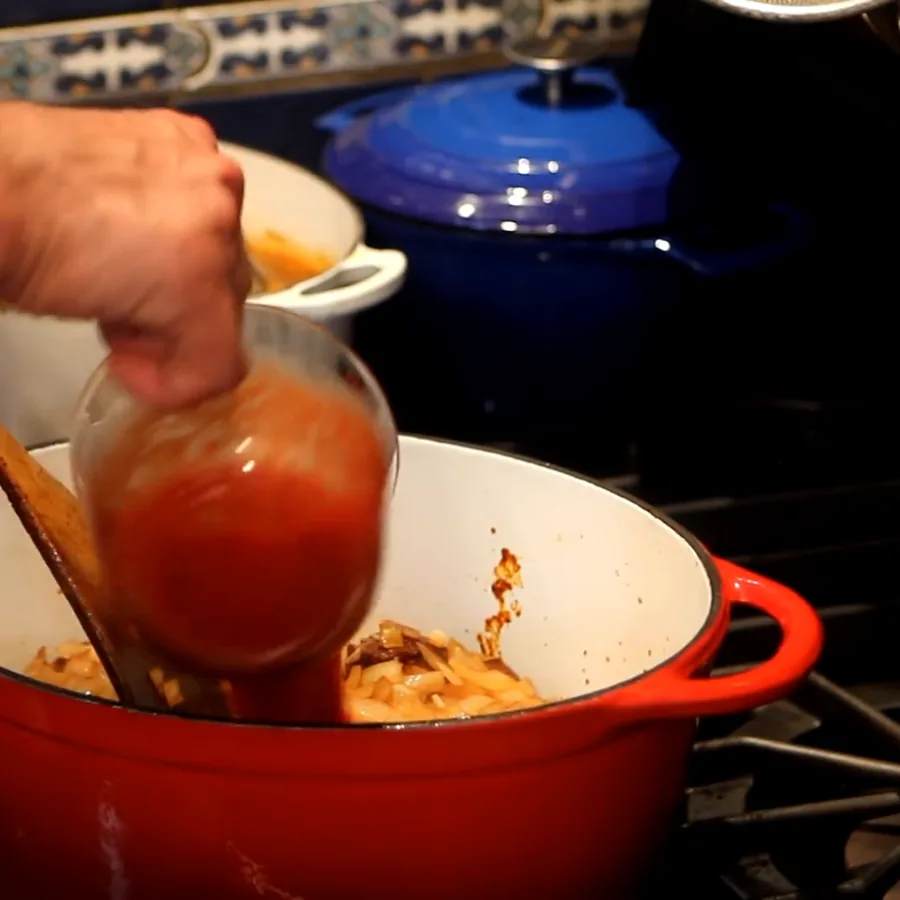
Lower the heat to medium-low. Add the paprika and stir quickly for 20 to 30 seconds. The mixture should turn deep red and fragrant. Do not walk away here.
Pour in the red wine and scrape the bottom of the pot. This is where a lot of flavor comes back into the sauce. For a more detailed explanation of that step, see my guide on how to deglaze a pan.


Add the crushed tomatoes and beef stock. Start with about 2 1/2 cups of stock. The liquid should almost reach the top of the beef, but the meat should not be swimming. Add salt and pepper, then bring to a gentle boil.

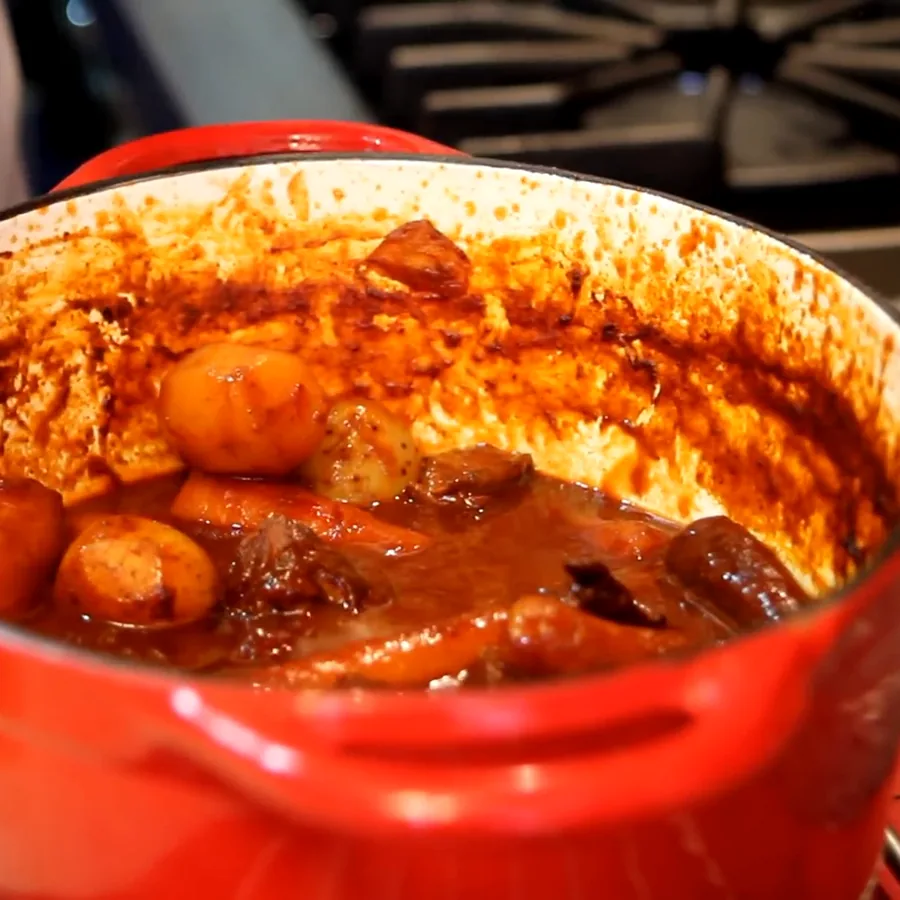
Add the carrots and optional root vegetables. Reduce the heat and simmer uncovered for about 1 hour. The pot should bubble gently, not violently. Stir from time to time and check the bottom so nothing sticks.
After 1 hour, check the beef. It will not be fully tender yet, but it should be starting to soften. Add the potatoes and continue simmering uncovered for 45 to 75 minutes more, until the beef is fork-tender and the potatoes are cooked.
If the sauce reduces too fast, add a splash of stock or water. If it looks too thin near the end, keep simmering uncovered. The mistake to avoid is stopping too early. The sauce should not be watery. It should look like a stew sauce, red, rich, and slightly thickened from the vegetables and reduction.

Taste at the end. Adjust salt, pepper, and paprika if needed. Seasoning at the end matters, especially if your beef stock was unsalted. This practical guide on how to season a recipe is useful for understanding why a stew can taste flat even after a long cooking time.
What to Serve with It
This stew already has potatoes and root vegetables, so it can be served on its own. A slice of bread is enough if you want to catch the last spoonfuls of sauce.
For a richer table, serve it with a simple potato side like French gratin dauphinois or traditional gratin dauphinois, but only if you skip the potatoes inside the stew. Otherwise it becomes a lot of potatoes in one meal.
For a bistro-style beef dinner, this recipe fits naturally beside other slow-cooked beef recipes from the French beef recipes collection. For more everyday beef ideas, the easy beef recipes for weeknight dinners page is a better place to browse.
Substitutions
Beef chuck: Use blade roast, boneless short rib, or stewing beef. If using pre-cut stewing beef, check tenderness carefully because the pieces are not always from the same cut.
Duck fat: Use vegetable oil, canola oil, avocado oil, or beef tallow. Butter alone is not ideal for browning because it can burn, but a little butter can be added with oil.
Red wine: Use extra beef stock if you prefer not to cook with wine. The sauce will be less deep, but still good. Add a small splash of vinegar near the end if it tastes too flat.
Crushed tomatoes: Use diced tomatoes, tomato passata, or a few tablespoons of tomato paste with extra stock. Tomato paste gives a stronger, darker result.
Potatoes: Use Yukon Gold, red potatoes, white potatoes, or small baby potatoes. If using Russets, cut them larger and add them later because they break down faster.
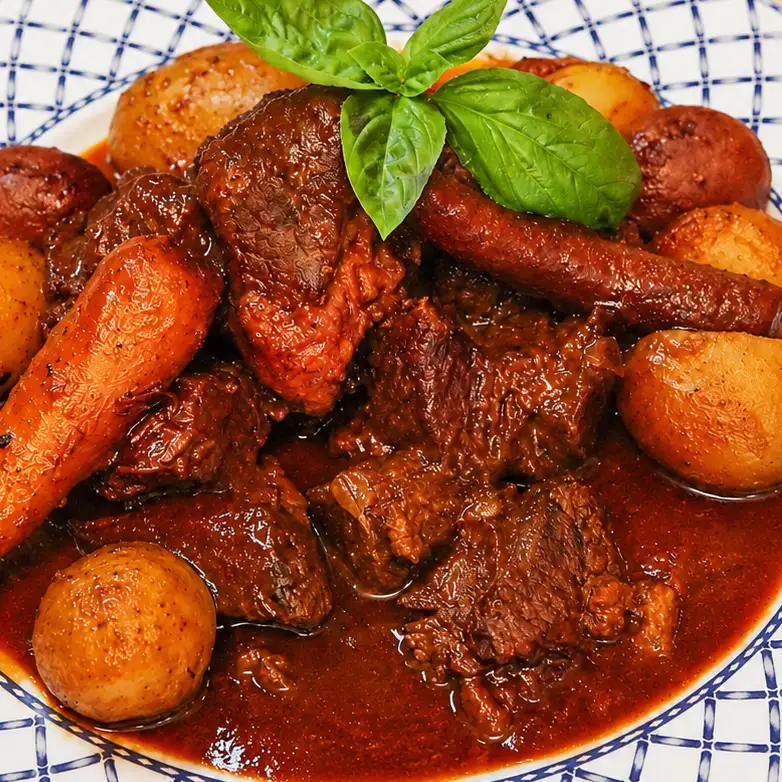
Root vegetables: Carrots are recommended. Rutabaga, turnip, parsnip, celery root, or yellow beet can all work. Keep the pieces large so they do not disappear into the sauce.
Paprika: Sweet Hungarian paprika is best. Add a pinch of cayenne or hot paprika if you want heat. Avoid using only smoked paprika unless you want a smoky stew.
Health and Nutrition Context
This is a hearty comfort food recipe with plenty of protein from the beef and extra substance from the potatoes and vegetables. It is not a light meal, but it is balanced in the sense that the stew includes meat, vegetables, and starch in one pot.
There is no cream or flour in the sauce. The body comes from reduction, onions, tomatoes, potatoes, and slow cooking. If you want a lighter plate, serve a smaller portion with a crisp salad or extra vegetables on the side.
FAQ
Is this a traditional Hungarian goulash?
It is Hungarian-inspired, but I call it my way because of the red wine, tomatoes, and Québec-style root vegetables. The paprika is the main Hungarian element, while the method is closer to a generous home-style beef stew.
Can I make it ahead?
Yes. This is even better the next day. Let it cool, refrigerate it, then reheat gently on the stove. Add a splash of water or stock if the sauce thickens too much overnight.
Why is my goulash watery?
Usually there is too much stock, the pot was covered too long, or the heat was too low to reduce the sauce. Simmer uncovered until the sauce thickens. Do not add flour unless you really need to rescue it.
Can I cook it in the oven?
Yes. After deglazing and adding the liquid, cover and cook at 325°F until the beef is almost tender, then add the potatoes and finish uncovered. The uncovered finish helps reduce the sauce.
Can I freeze it?
Yes, but potatoes can become softer after freezing. The flavor will still be good. Freeze in portions and reheat gently.
What is the best paprika for this recipe?
Use sweet Hungarian paprika. It gives color, aroma, and a warm pepper flavor without making the stew too spicy.
Suggested Posts
For another paprika-based dinner, try Hungarian-style chicken.
For a classic beef stew direction, make hearty beef stew.
For a French slow-cooked beef recipe, try braised beef cheeks with red wine.
For a cozy potato side, serve pommes sarladaises with duck fat.
For a beef and potato comfort dish in a different style, try cheesy beef and potato gratin.

Hungarian Beef Goulash with Potatoes, Easy Dutch Oven Comfort Food
Ingredients
- 2 1/2 lb beef chuck blade roast, or boneless pot roast, cut into large cubes
- 2 tbsp duck fat or vegetable oil plus more if needed
- 3 medium onions sliced or diced
- 3 tbsp sweet Hungarian paprika
- 1 cup red wine
- 1 can crushed tomatoes 14 oz
- 2 1/2 to 3 cups beef stock plus more if needed
- 2 large carrots cut into large pieces
- 1 small rutabaga or turnip cut into large pieces, optional
- 1 small yellow beet cut into large pieces, optional
- 1 1/2 lb Yukon Gold red, or white potatoes, cut into large chunks
- 1 tsp fine salt plus more to taste
- 1/2 tsp black pepper plus more to taste
- 1 bay leaf optional
- 2 garlic cloves chopped, optional
- Fresh parsley or basil for serving, optional
Instructions
- Cut the beef into large cubes and pat dry.
- Heat the duck fat or oil in a large Dutch oven over medium-high heat.
- Brown the beef in batches, leaving space between the pieces. Transfer to a plate.
- Add the onions to the same pot and cook until softened and lightly browned.
- Lower the heat to medium-low. Add the paprika and stir for 20 to 30 seconds only.
- Deglaze with the red wine, scraping the bottom of the pot.
- Add the crushed tomatoes, beef stock, salt, pepper, and optional bay leaf or garlic.
- Return the beef to the pot. The liquid should almost reach the top of the meat without fully drowning it.
- Bring to a gentle boil, then add the carrots and optional root vegetables.
- Simmer uncovered for about 1 hour, stirring occasionally.
- Add the potatoes and continue simmering uncovered for 45 to 75 minutes, until the beef is fork-tender and the potatoes are cooked.
- Add a splash of stock if the sauce gets too thick before the beef is tender.
- If the sauce is too thin at the end, continue simmering uncovered until reduced.
- Taste and adjust salt, pepper, and paprika.
- Serve hot with fresh herbs if desired.
Video
Notes
FAQ
Is this a traditional Hungarian goulash?
It is Hungarian-inspired, but I call it my way because of the red wine, tomatoes, and Québec-style root vegetables. The paprika is the main Hungarian element, while the method is closer to a generous home-style beef stew.Can I make it ahead?
Yes. This is even better the next day. Let it cool, refrigerate it, then reheat gently on the stove. Add a splash of water or stock if the sauce thickens too much overnight.Why is my goulash watery?
Usually there is too much stock, the pot was covered too long, or the heat was too low to reduce the sauce. Simmer uncovered until the sauce thickens. Do not add flour unless you really need to rescue it.Can I cook it in the oven?
Yes. After deglazing and adding the liquid, cover and cook at 325°F until the beef is almost tender, then add the potatoes and finish uncovered. The uncovered finish helps reduce the sauce.Can I freeze it?
Yes, but potatoes can become softer after freezing. The flavor will still be good. Freeze in portions and reheat gently.What is the best paprika for this recipe?
Use sweet Hungarian paprika. It gives color, aroma, and a warm pepper flavor without making the stew too spicy.🔗 Useful Links
🛒 Michel Dumas Shop : Explore our kitchen essentials, including aprons and knives.
🌐 Linktree : Access all our important links in one place.
📱 YouTube | Instagram | Facebook | TikTok : Follow us for the latest recipes and culinary tips.