Eggnog Bread Pudding with a Soft Centre and Golden Top
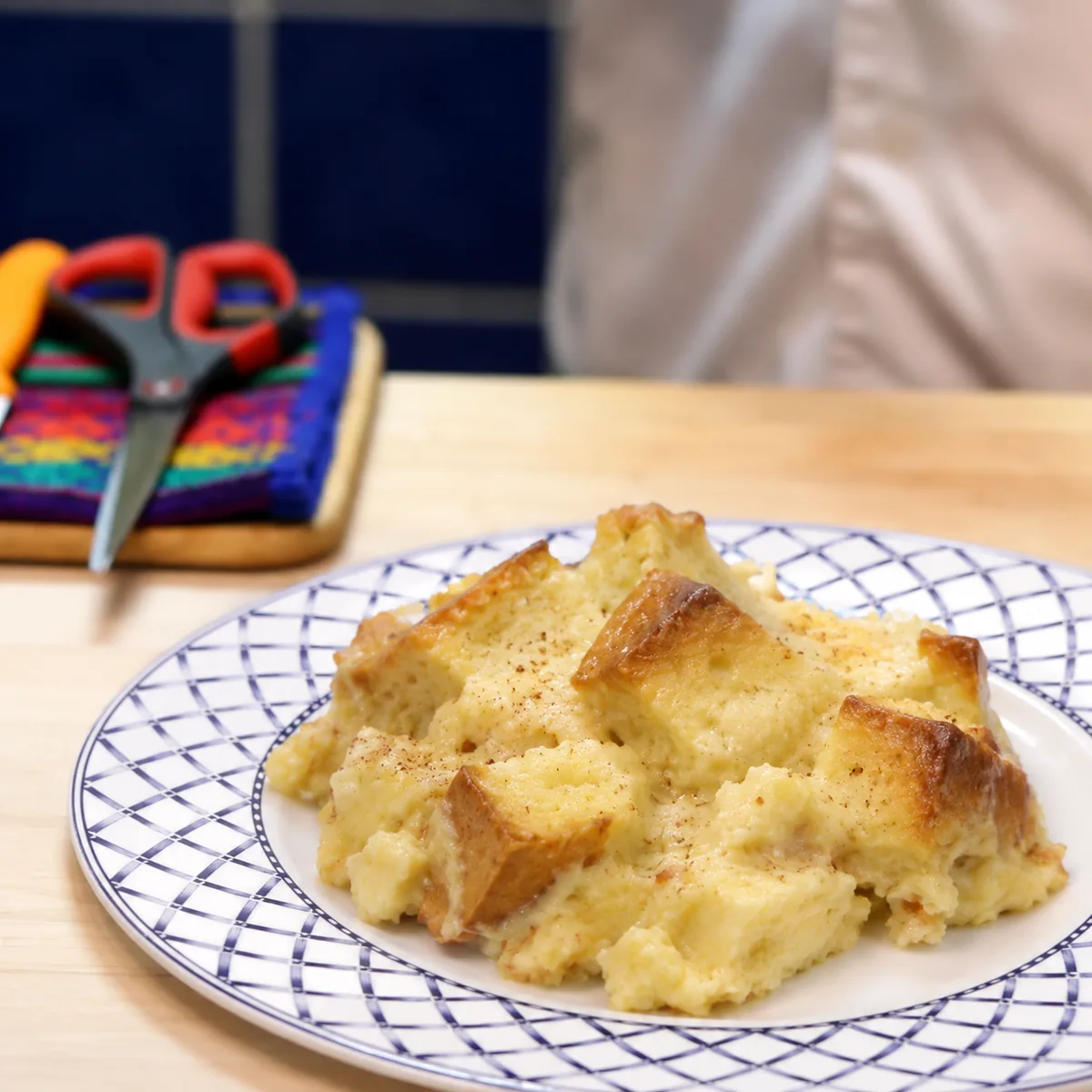
Eggnog bread pudding turns day-old bread into a warm holiday dessert with a soft custard centre and golden edges. This version uses refrigerated, pasteurized, non-alcoholic eggnog, milk, and three eggs, with only a little extra sugar. The bread soaks before baking so the middle becomes tender instead of hiding dry cubes. Serve it warm after a short rest, with the rough pieces on top still lightly crisp and the custard underneath fully set.
Choose bread with enough structure
A plain white country loaf or French loaf works well. Weigh twelve ounces of bread before cutting it into roughly one-inch cubes. The cup measurement is only approximate because the spaces between cubes vary. Keep the crust unless it is exceptionally thick or tough; ordinary crust gives the finished pudding useful texture and stops every bite from feeling exactly the same.
Day-old bread absorbs the custard more readily than very fresh, soft bread. If the loaf is fresh, spread the cubes on a baking sheet and dry them in a 300°F oven for about ten to fifteen minutes. They should feel dry on the surface without becoming brown toast. Let them cool before adding the custard so they do not warm the eggs unevenly.
Avoid heavily seeded bread, garlic bread, or a strongly sour loaf for this particular flavour combination. Brioche can work, but its added butter and sugar make a richer, softer dessert; the plain loaf is the reference for the quantities here. My French toast with maple syrup uses the same useful idea of bread absorbing an egg mixture, with a different cooking method and liquid balance.
What kind of eggnog to use
Use a chilled commercial eggnog made with pasteurized dairy and eggs, without alcohol. Shake the carton before measuring, especially if spices have settled. A thick drinking eggnog is suitable; concentrated mixes and powdered products need their own dilution instructions and are not direct replacements. The added milk lightens the eggnog so the bread can absorb it without the dessert becoming overly heavy.
Taste the eggnog by itself before mixing in the raw eggs. Most brands are already sweet and seasoned, which is why the recipe adds just two tablespoons of sugar. The small pinch of extra nutmeg should support the eggnog rather than dominate it. If the carton has a strong spice flavour, omit that extra pinch. Vanilla rounds out the custard without needing another extract.
Do not replace the eggnog with plain milk and expect the same pudding. Eggnog contributes sweetness, dairy richness, and flavour as well as liquid. Homemade eggnog also varies widely in thickness and sugar. I use the commercial non-alcoholic version here to keep the recipe straightforward. If serving a separate rum sauce, label it clearly and offer it separately rather than changing the baking mixture.
Mix a smooth custard
Butter a shallow two-and-a-half-quart baking dish, approximately eight by eleven inches. Use about a teaspoon of the measured butter for the dish and melt the rest, then let it cool slightly. Whisk the three eggs with the sugar and salt until the whites are broken up. Add the eggnog, milk, vanilla, optional nutmeg, and melted butter, whisking just until evenly combined.
There is no need to whip a thick foam into the custard. A few bubbles are harmless, but vigorous beating does not make bread pudding lighter in a useful way. Scrape the bowl so sugar is not left at the bottom. Do not taste this mixture after adding the eggs. Its final sweetness is better judged from the eggnog and the measured sugar before that step.

Give the bread time to absorb
Put the bread cubes in the prepared dish and pour the custard evenly over them. Turn the cubes gently with a spoon, bringing dry pieces from the top into the liquid. Let stand for twenty-five minutes, pressing the bread down once or twice. A few edges may remain above the surface, but the centre of a large cube should feel damp rather than chalky when you break it open.
I leave some rough corners exposed because they make the most appealing contrast after baking. Do not compact the bread into a solid block with heavy pressure. The cubes should settle together naturally, with custard between them. If a very dry loaf has absorbed the mixture unevenly, turn the driest pieces again instead of immediately adding more liquid and changing the balance of the whole dish.

Bake until the centre is set
Heat the oven to 350°F with a rack in the middle. Bake the pudding for forty-five to fifty-five minutes. The exposed bread should turn golden and the centre should be set, with a gentle wobble rather than a wave of liquid. Insert an instant-read thermometer into the custard near the middle, avoiding a dry bread corner; it should reach at least 160°F.
If the top browns before the centre sets, lay foil loosely over the dish for the remainder of baking. A shallow dish helps the middle cook before the edges dry out. A deep casserole may need substantially longer and gives a different proportion of crisp surface to soft interior. The visual cues and centre temperature matter more than making every oven finish at exactly the same minute.
Let stand for fifteen minutes before serving. The custard settles, the bread holds together more easily, and the top remains pleasantly irregular. This is a spoonable dessert, so a clean cake-like slice is not the goal. I prefer a warm portion lifted with a broad spoon, including a little golden top and some softer custard from underneath.

Serve simply, without hiding the eggnog
The pudding is already sweet enough to serve on its own. A small spoonful of brown sugar caramel sauce can be offered alongside, but pour sparingly so the eggnog remains noticeable. A small scoop of vanilla custard ice cream is another option for a warm-and-cold contrast. Neither topping is included in the nutrition estimate.
For another soft dessert with a different base, try old-fashioned rice pudding or traditional crème caramel. My crème brûlée gets its crisp surface from caramelized sugar; do not borrow that finishing method here, where the exposed bread provides the texture.
If planning a dessert table, choose contrasting formats rather than several heavy custards. Maple pouding chômeur, apple pudding cake, and rum banana cake are other warm options for a different occasion. A chilled homemade tiramisu can be prepared separately when you want a cold dessert available as well.
Make ahead, reheat, and avoid dry leftovers
You can assemble the pudding in a suitable baking dish, cover it, and refrigerate for up to twelve hours before baking. Add no extra liquid automatically; the longer soak changes how the bread looks, not the measured ingredients. Follow the dish manufacturer’s guidance about moving a refrigerated dish into a hot oven. A cold pudding usually needs a little longer to set than one baked after the short soak.
Refrigerate leftovers within two hours in a covered container and use within three days. Reheat covered in a 325°F oven until the centre reaches 165°F, then uncover briefly if you want to dry the top. Small portions can be microwaved, though the crust softens. Freeze cooled portions for up to two months for best quality, thaw in the refrigerator, and reheat gently. Avoid repeated reheating of the whole batch.
Can I add raisins? They are not included in this version; start with the plain pudding to keep its texture predictable. Why is the centre wet? It may need more baking, especially in a deeper dish. Why is it dry? Check the bread weight, avoid extending baking after the custard sets, and cover leftovers while reheating. More sauce can add moisture at serving, but it cannot reverse overcooked custard.
For the rest of the meal, the holiday entertaining guide includes mains and sides you can plan around oven time.

Eggnog Bread Pudding with a Soft Centre and Golden Top
Ingredients
- 12 ounces day-old plain white bread cut into 1-inch cubes (about 8 cups)
- 2 tablespoons unsalted butter divided between dish and custard
- 3 large eggs
- 2 tablespoons granulated sugar
- 1/4 teaspoon fine salt
- 2 1/2 cups pasteurized non-alcoholic commercial eggnog
- 1 cup whole milk
- 1 teaspoon vanilla extract
- 1/8 teaspoon ground nutmeg optional if eggnog is already strongly spiced
Instructions
- If bread is fresh, dry cubes at 300°F for 10 to 15 minutes without browning; cool. Butter a shallow 2 1/2-quart dish with about 1 teaspoon of the butter. Melt and cool the remaining butter.
- Whisk eggs, sugar, and salt. Add eggnog, milk, vanilla, optional nutmeg, and melted butter. Mix evenly without whipping heavily.

- Put bread in the dish. Pour custard over it and turn gently. Soak 25 minutes, pressing down once or twice so the cubes absorb evenly.
- Heat oven to 350°F. Bake 45 to 55 minutes, until golden, set at the centre, and at least 160°F in the custard. Loosely cover with foil if the top browns early.

- Rest 15 minutes before serving warm. Optional sauces and ice cream are served separately.