Crispy Pommes Pailles Recipe | French Shoestring Potatoes
Pommes pailles are very thin French shoestring potatoes, fried until light, crisp, and golden. They are thinner than regular fries, more delicate than potato chips, and made to be served as a classic bistro garnish beside steak, fish, eggs, or a simple salad. This recipe is based on my YouTube video for paillarde de boeuf and pommes pailles, with a few adjustments since publication to make the potato part more precise for home cooks.
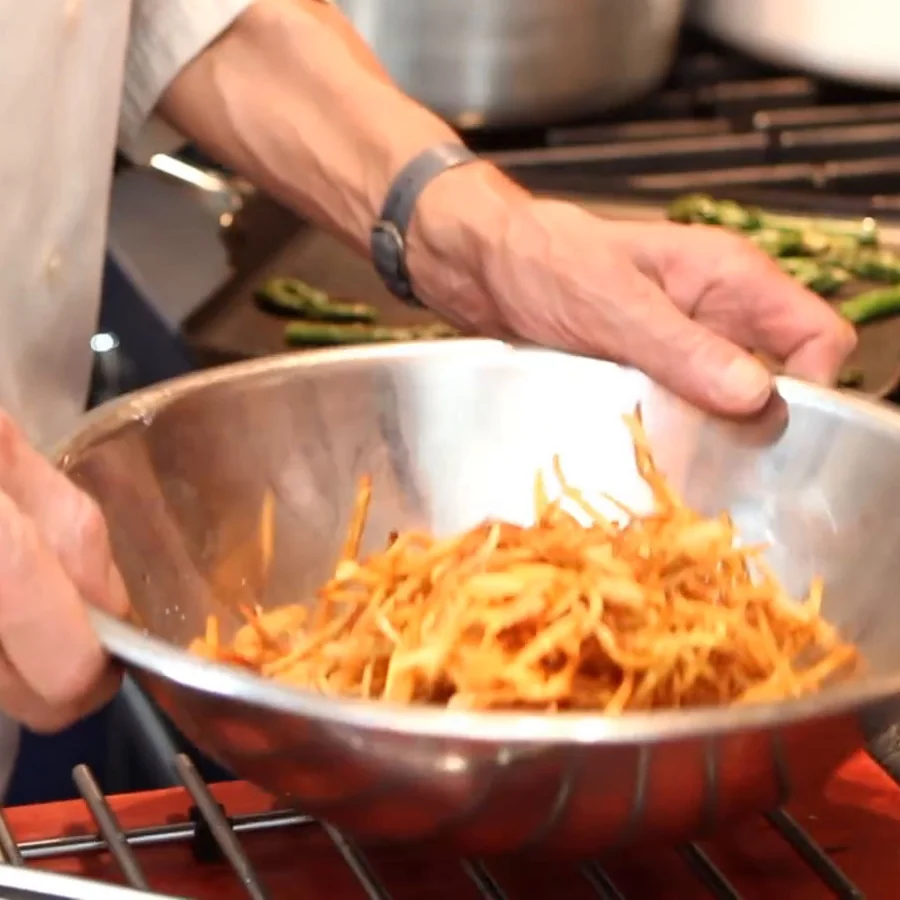
The main thing to respect here is moisture. Thin potatoes fry fast, but if they are not rinsed, separated, and dried properly, they clump together and turn greasy instead of crisp. What I look for is a fine, loose nest of potatoes that moves freely in the oil and becomes golden without turning dark brown.
What Makes This Recipe Different
This is not a regular French fry recipe. For classic fries, you usually cut thicker sticks and often cook them in two stages. Pommes pailles are cut much finer, almost like straw, and they cook in one quick fry. They should feel light, almost fragile, and crisp enough to rustle when you move them in the bowl.
I make them this way because they bring a restaurant-style finish to a plate without needing a sauce or complicated garnish. With a steak, especially something simple like a pan-seared bavette or a paillarde, the potatoes give crunch without making the whole plate heavy.
The mistake to avoid is frying them wet or overcrowding the pot. Since the pieces are so thin, they have no forgiveness. Too much moisture drops the oil temperature, and too many potatoes at once makes them stick into a greasy block. Small batches are not just a suggestion here, they are the difference between crisp potatoes and disappointment.
This recipe also stays separate from other potato recipes on the site. If you want a thicker, bistro-style fry, use my homemade French fries. If you want a double-fried version inspired by Belgium, go with the Belgian fries. If you want thin round slices instead of straw-cut potatoes, my homemade potato chips are the better match.
Ingredients You Need
You only need a few ingredients, but the potato choice matters. Russet potatoes give the crispiest result because they are starchy and fry well. Yukon Gold potatoes also work, though they will be slightly more golden and a little less dry-crisp.
Use a neutral frying oil with a high smoke point. Canola, sunflower, peanut, or vegetable oil all work. Do not use olive oil for this. The flavor is too strong, and it is not the best choice for this kind of hot, fast frying.
Salt only after frying. If you salt the raw potatoes, they release moisture, and moisture is the enemy of crisp pommes pailles.

Step-by-Step Instructions
Cut the potatoes very thin
Peel the potatoes if you want a cleaner bistro look. You can also leave the skin on if the potatoes are well scrubbed, but for classic pommes pailles, peeled potatoes look better on the plate.
Use a mandoline fitted with a fine julienne blade. Aim for very thin strands, about the thickness of matchsticks or slightly finer. A knife can work if you are very comfortable with it, but honestly, the mandoline gives a much more regular result.
Use the guard. Thin potato cuts are not worth losing a fingertip.

Rinse off the starch
Place the cut potatoes in a large bowl of cold water. Move them around with your hands to separate the strands. The water will turn cloudy. That is the starch coming off, and that is exactly what you want.
Rinse until the potatoes feel loose and no longer sticky. They should not cling together in a heavy pile.

Dry them very well
Drain the potatoes, then spread them on a clean kitchen towel or several layers of paper towels. Pat them dry thoroughly.
Do not rush this step. At this point, the potatoes should feel almost dry to the touch. If they are still dripping or shiny with water, they are not ready for the oil.
I prefer to dry them in a thin layer rather than in a big mound. It takes a few extra minutes, but it gives a better fry.

Heat the oil
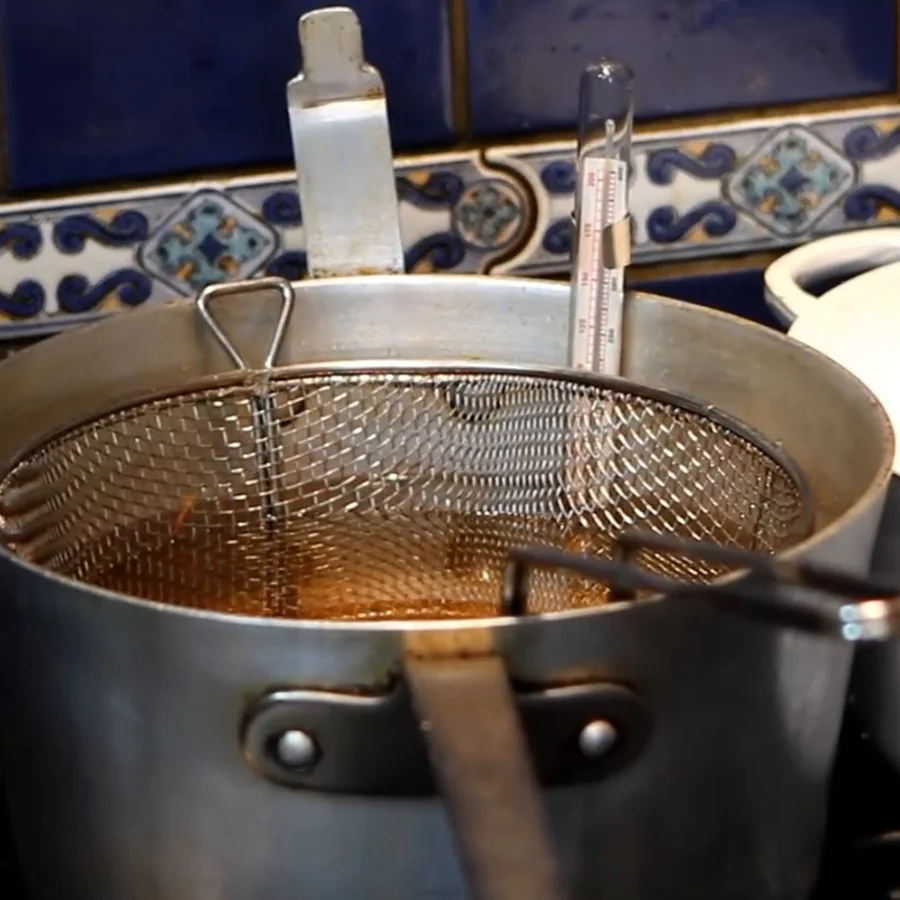
Heat the oil to 350°F in a deep pot or fryer. Use enough oil so the potatoes can float freely. A shallow layer of oil makes them clump and brown unevenly.
When the first small piece of potato goes in, it should bubble immediately but not smoke. If the oil is too cool, the potatoes absorb oil. If it is too hot, the edges darken before the center is crisp.
Fry in small batches
Add a small handful of potatoes to the oil. Do not drop in the whole batch at once. Use tongs or a spider to gently move the potatoes as they fry, separating any strands that want to stick together.
You know they are ready when the bubbling slows down, the potatoes look golden, and the strands feel light when lifted from the oil. This usually takes 2 to 4 minutes, depending on how thin they were cut.
Drain and season
Lift the potatoes from the oil and drain well. Transfer them to paper towels or a rack. Salt them right away while they are hot.
If you are making the steak or another main dish at the same time, you can keep the pommes pailles warm in a low oven for a short time. Spread them on a tray instead of piling them in a deep bowl. Steam softens them, so give them space.
What to Serve With Pommes Pailles
Pommes pailles are made for simple, strong main dishes. They are excellent beside a seared steak, especially a thin beef paillarde, because the contrast is clean: crisp potatoes, juicy beef, a little mustard or herb butter, and nothing too complicated.
For a full bistro plate, serve them with steak with maître d’hôtel butter or a pan-seared bavette steak. They also make sense with steak frites and béarnaise, but in that case, they replace the usual fries and make the plate feel lighter.
For sauce ideas, a creamy steak sauce works well, but use a small amount. A strong sauce can hide the potatoes. I like them with creamy Dijon sauce or a spoonful of beurre maître d’hôtel melting beside the meat.
If you want a potato side that is less delicate and easier to hold for a meal, try Lyonnaise potatoes or pommes sarladaises.
Substitutions

Russet potatoes are the best choice for a dry, crisp finish, but Yukon Gold potatoes can be used if that is what you have. They are a little waxier, so the final texture will be slightly less brittle, but still very good if you dry them properly.
For the oil, use canola, sunflower, peanut, or another neutral frying oil. Avoid butter for the frying itself. Butter burns too quickly at this temperature. If you want a buttery flavor, serve the pommes pailles beside a butter-based sauce or herb butter instead.
You can season them with more than salt, but keep it simple. A little smoked paprika, garlic powder, or fine black pepper can work, but too much seasoning hides the potato flavor. For the classic bistro version, fine salt is enough.
You can also use this same method for a smaller garnish. Fry just one potato and use the crisp strands on top of a steak, omelette, burger, or salad. It is a good way to add texture without making a full side dish.

FAQ
Can I make pommes pailles without a mandoline?
Yes, but it is much harder to get the right texture. A mandoline gives even strands, and even strands cook evenly. If you cut them by hand, use a very sharp knife and take your time. Uneven pieces will give you a mix of pale soft potatoes and dark overcooked ones.
Why did my pommes pailles turn soggy?
The most common reasons are wet potatoes, oil that was too cool, or too many potatoes added at once. Dry the potatoes very well, keep the oil around 350°F, and fry in small batches.
Do I need to fry them twice?
No. For pommes pailles, one fry is enough because the potatoes are cut very thin. Thicker fries usually need a different method. For that style, use my crispy air fryer fries or classic fried potato recipes instead.
Can I make them ahead?
They are best right after frying. You can keep them warm for a short time in a low oven, spread on a tray, but they will slowly lose crispness. Do not cover them tightly or they will steam.
Can I reuse the frying oil?
Yes, if the oil is still clean and has not overheated. Let it cool completely, strain it, and store it for another frying recipe. If it smells burnt or looks very dark, discard it.
Are pommes pailles the same as potato chips?
No. Potato chips are usually thin round slices. Pommes pailles are julienned into very fine sticks. If you want the sliced version, use my crispy potato chips.
Suggested Posts
For more French potato sides, try classic pommes boulangères, pommes paillasson, or Parisian potatoes. They all use potatoes, but each one gives a different result: layered and tender, grated and crisp, or sautéed and golden.
For steak pairings, these pommes pailles go very well with Dijon mustard steak, steak Diane, or steak with Roquefort sauce. Keep the plate simple and let the potatoes do the crunchy work.
Crispy Pommes Pailles Recipe | French Shoestring Potatoes
Ingredients
- 1 lb russet potatoes
- 6 to 8 cups neutral frying oil
- Fine salt to taste
Instructions
- Peel the potatoes, then cut them into very fine julienne strands using a mandoline.
- Place the potatoes in cold water and gently separate the strands with your hands.
- Drain well and dry thoroughly with a clean towel or paper towels.
- Heat the oil to 350°F in a deep pot or fryer.
- Fry the potatoes in small batches, gently moving them so they do not clump.
- Cook for 2 to 4 minutes, until golden, crisp, and light.
- Drain on paper towels or a rack.
- Season with fine salt while hot and serve immediately.